“Green Phase”: How the Sudanese Armed Forces Defeated the Militia Before the Battle Even Began?

Do not attack a fortified stronghold; instead, make those inside flee on their own.
Make your enemy lose in every encounter until they find no reason to fight the final battle.
Make your enemy see the upcoming battle as an inevitable end, forcing them to flee before it even begins.
Ensure that the enemy carries the weight of their previous defeats into every battle until the burden crushes them before they can even lift their sword.
An opponent who flees the battlefield before you even arrive is one you have already defeated long ago.
The Battle of Khartoum is one of the historical battles that could reshape the understanding of “war” as a deeply rooted military concept. Unlike conventional battles, its victory was not the result of a single confrontation but rather a series of strategic engagements that ensured complete success before the actual fighting began.
The general perception often links victory to “direct force,” with an intense desire to witness the effects of real war—bloodshed and destruction—to validate the authenticity of the battle. However, this is a shallow way of thinking. History has shown that the greatest military leaders have always sought victory with minimal losses, avoiding unnecessary bloodshed. The true battle was not when the militia fled but in the preceding stages, where they were strategically and psychologically exhausted, realizing that defeat was inevitable. At that point, they had no choice but to “flee” rather than face complete annihilation.
The cumulative strategy of decisive victory, also known as the cumulative impact of operations, was executed with unprecedented success by the Sudanese Armed Forces. This method, which relies on isolation, encirclement, and destruction, was systematically applied in several regions: Jabal Moya, Sennar, Dinder, Al-Suki, the vicinity of Sennar, Sennar Sugar, Al-Jazirah State, Bahri Locality, Qari Military Area, East Nile Locality, Omdurman, Al-Dali, Al-Mazmoum, and Central Khartoum.
This repeated strategy deeply ingrained in the militia’s mindset that they could neither withstand nor achieve military success. Their collapse became inevitable when the Sudanese Armed Forces made coordinated advances from the White Nile and Al-Jazirah states. When the militia realized the concentrated firepower they would face in the final confrontation in Khartoum, they hesitated to fight, fearing the fate of their defeated forces in Central Khartoum, whose destruction had even reached the ears of “Chad.”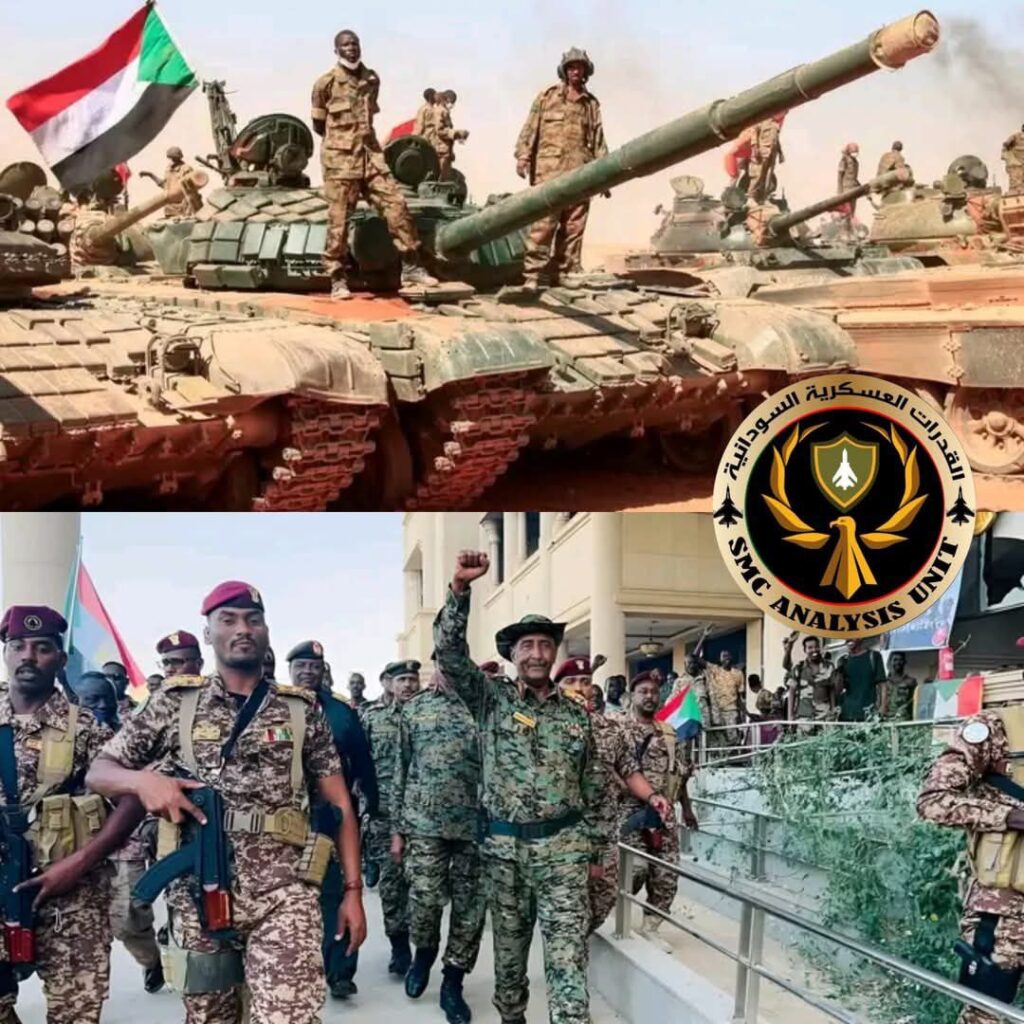
The Sudanese Armed Forces did not just gradually destroy the enemy; they shattered their morale, leading to a total breakdown in confidence among soldiers and commanders. The realization that resistance only led to further losses created panic and disorganization. This was evident in the militia’s desperate attempts to withdraw from central Khartoum by force, which resulted in a complete operational collapse and the chaotic retreat of forces without formal withdrawal orders, known as an emergency retreat.
The cumulative strategy of decisive victory ultimately led to a loss of trust between the militia’s soldiers and their leadership. Repeated false claims of “tactical withdrawal” caused soldiers to lose faith in their commanders, to the extent that the militia leader himself was accused of betrayal. The growing awareness that continued resistance was futile further eroded the will to fight.
The Sudanese Armed Forces achieved victory in the Battle of Khartoum with minimal human and material losses, conducting a non-traditional, low-cost battle in a highly complex urban environment. With minimal effort, the military neutralized the militia without direct combat, as the collapse of fighting spirit led to massive collective surrender, allowing for swift territorial control with minimal resistance.
This battle is not an exception—even if the militia attempts to rebuild, it will remain psychologically scarred, reducing its ability to “launch another campaign.” The Sudanese Armed Forces have established a historic precedent of military dominance, reinforcing their reputation as an invincible force.
The Rapid Support Forces (RSF) militia has already lost its future will to fight. Even if it acquires the necessary military resources, hesitation will plague any future engagements. Claims that the Sudanese Armed Forces will struggle if they shift their military focus to Darfur ignore the full scope of Sudanese military strategy.
The recent battles leave no doubt: the Sudanese Armed Forces may no longer need to engage in traditional military confrontations, as the time for resistance against their unyielding determination has simply run out.